
As it’s July, Fibroid Awareness Month, I was incredibly honored to partner with The Telegraph to deliver an educational presentation on uterine fibroids. It was a true blessing to share a room with so many women and speak about something I am deeply passionate about, rooted not just in a clinical textbook, but in my own lived experience.
Just over a year ago, the Her Body, Her Power community was born while I was still physically and emotionally recovering from a major surgery I wasn’t sure I’d ever fully overcome. Yet, here we are today.
My own journey started when I discovered I had a fibroid that rapidly grew from 10cm to a staggering 15cm in just a matter of months. Navigating that terrifying growth changed everything for me. It forced me to research, ask hard questions, and fiercely advocate for myself when the medical system wasn’t doing it for me. I couldn’t find the soft, supportive, and informed community I desperately needed during my recovery, so I built it.
Because early awareness makes all the difference, let’s dive into what your body might be trying to tell you, what causes these growths, and how we can take our power back through holistic nutrition.
Section 1: Fibroids 101 — What & Where?
Before we look at how to heal, we have to understand what we are dealing with. Uterine fibroids are non-cancerous growths of muscle and fibrous tissue that develop in or around the uterus. They are incredibly common, particularly among Black women, and many people live with them for years without ever knowing, until the symptoms begin to disrupt daily life.
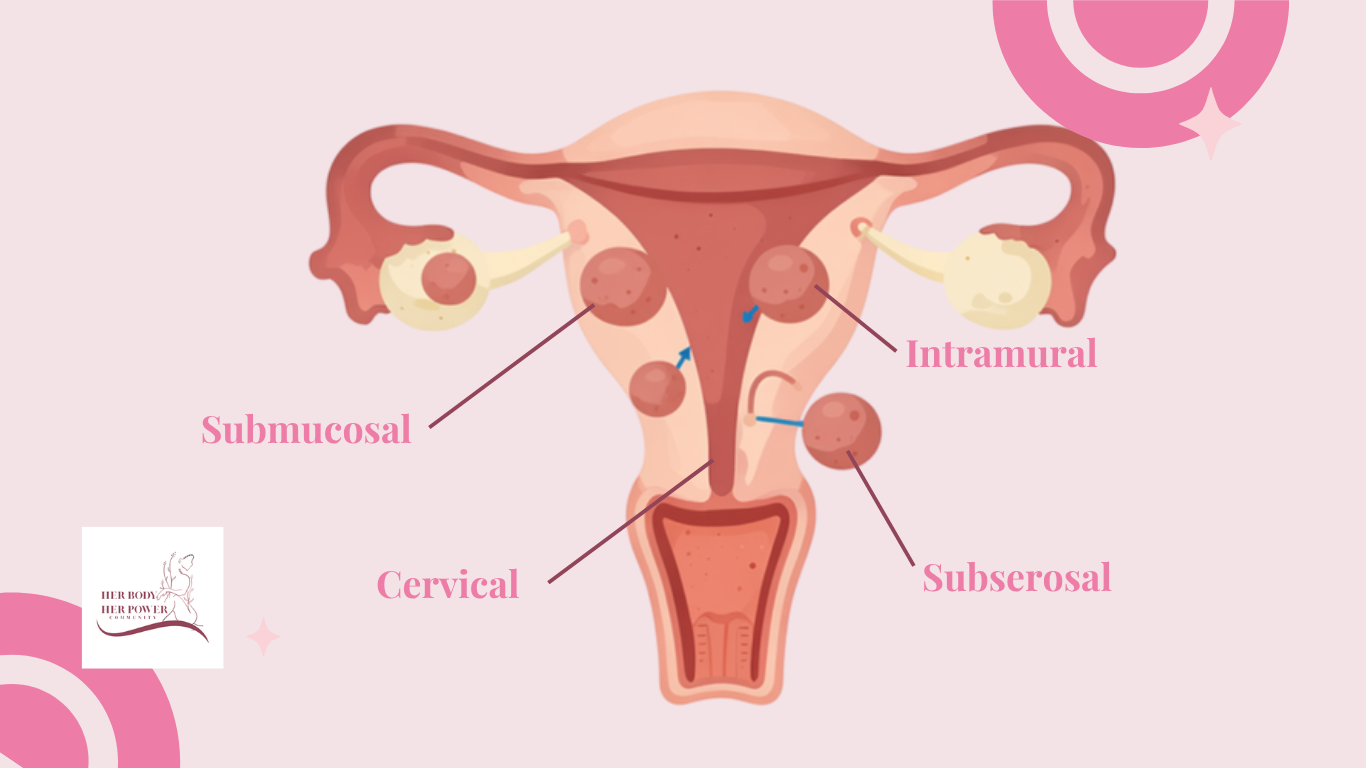
Where They Grow
Depending on where they choose to grow, they can impact your body differently:
- Intramural: Growing within the muscular wall of the uterus.
- Subserosal: Developing on the outside surface of the uterus.
- Submucosal: Growing just underneath the inner lining of the uterus.
- Cervical: Developing in the neck of the womb (cervix).
Fibroid Size Guide: Seed to Melon
Size doesn’t always equal severity, but tracking it matters. To put it into perspective, fibroids generally fall into brackets ranging from the size of a seed to a melon.
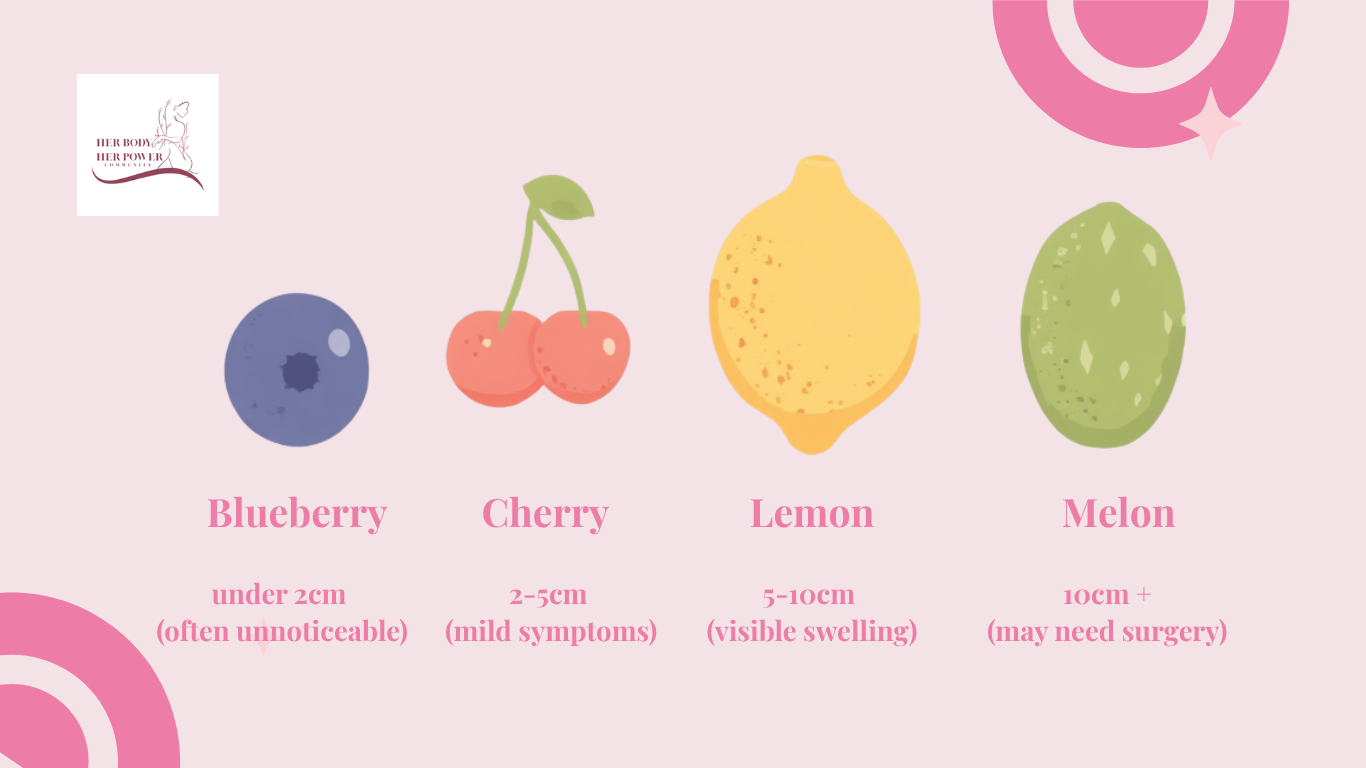
Fibroids Vary In Size
Common Symptoms to Look For: Let’s Break It Down 1 by 1
Your body speaks to you in whispers before it screams. If you are experiencing any of the following, it’s time to investigate:
- Heavy or prolonged menstrual periods: And I mean truly heavy. Soaking through protection, passing clots, and bleeding so significantly that it affects your ability to leave the house, go to work, or live your life.
- Bloating, pelvic pain, or pressure: That persistent, uncomfortable feeling of fullness or heavy pressure in your lower abdomen.
- Pain during sex: This is so often suffered in silence because women feel embarrassed to raise it with their doctors. You should never have to compromise your comfort.
- Frequent urination or constipation: As fibroids expand, they physically press on surrounding organs like your bladder and bowel, disrupting your normal habits.
- Severe fatigue: This one is so deeply underestimated. Women are consistently told they are “just tired.” They are not just tired, many are dealing with anemia from chronic blood loss, and their bodies are working overtime just to function.
- Fertility and pregnancy challenges: Depending on their location, certain fibroids can impact your reproductive path.
- No symptoms at all: Critically, some women have absolutely no symptoms. Which is exactly why regular check-ins with your body and your doctor matter.
If something feels wrong, you are not overreacting. You know your body better than anyone else. Trust it.
Section 2: Why Do Fibroids Grow?
Fibroids don’t appear out of nowhere; they grow in response to internal and external triggers. When working with women in our community, I focus on the five interconnected factors that fuel their development:
- Hormonal Imbalance (Estrogen Dominance): Fibroids are highly sensitive to estrogen. When your liver is overwhelmed and cannot efficiently clear excess estrogen, it recirculates in the body and literally feeds the fibroid growth.
- Inflammatory Foods: Diets high in refined sugar, processed dairy, and factory-farmed red meat trigger systemic inflammation that directly affects the uterus and digestion.
- Toxic Exposures: Everyday products contain hormone-mimicking chemicals called xenoestrogens. Think BPA plastics, non-organic tampons, and heavily fragranced hair products and lotions.
- Genetics & Family History: If your mother, aunt, or sister had fibroids, your genetic risk is higher but remember, your lifestyle choices still hold immense power.
- Chronic Stress & Poor Sleep: High stress levels mean elevated cortisol, which completely disrupts your progesterone-to-estrogen balance.
Section 3: The ÇO Womb-Healing Nutrition Blueprint
As a trainee nutritionist, this is where I want to give you your power back. We cannot always control our genetics, but we can change what we put on our plates to support liver detoxification, calm inflammation, and stabilise blood sugar.
Foods to Focus On (The Fibroid Fighters)
- Cruciferous Veggies & Leafy Greens: Broccoli, kale, and cabbage contain compounds that help your liver safely package and flush out excess estrogen.
- Fiber-Rich Foods: Chia seeds, lentils, and oats keep your bowels moving, which is essential because regular elimination is how your body gets rid of spent hormones.
- Omega-3 Fatty Acids: Wild salmon, sardines, and flaxseeds act as natural anti-inflammatories to soothe pelvic pain.
- Iron & Vitamin C: Spinach, pumpkin seeds, and quinoa paired with vitamin C help replenish the blood lost during heavy cycles.
Foods to Limit (The Fibroid Fuel)
To give your uterus the best environment to heal, try to drastically reduce or eliminate refined sugars, processed dairy, alcohol, caffeine, and processed meats. These foods cause rapid blood sugar spikes, which increase insulin and subsequently trigger estrogen dominance.
Are You Listening?
Your body is talking to you. Are you listening?
You now know what fibroids are, what feeds them, and what fights them. You know what signs to look for and what questions to ask your doctor. Trust your symptoms, advocate fiercely for yourself, and remember that you deserve to be heard.
You don’t have to walk this healing journey alone.
Join the Movement: Want to learn more about how to align your nutrition with your cycle? [Sign up for our community newsletter here] or follow our daily healing tips on Instagram at [@herbodyherpower]. Let’s grow and heal together!
Disclaimer: The information shared in this blog post is based on my personal lived experience, recovery journey, and training in holistic nutrition. It is intended for educational and awareness purposes only and should not replace professional medical advice, diagnosis, or treatment. Please always consult with your doctor or a qualified healthcare professional if you have any concerns or specific questions about your health.